 ×
×
The world's first Takaful-backed,
Sharia-compliant digital livestock investment portfolio
AgriCore and Blade Labs have launched a Mudarabah livestock investment programme in Bangladesh. Capital is deployed, the system is operational, and every event is recorded on blockchain and reviewed by a Shariah Supervisory Board.
What this unlocks
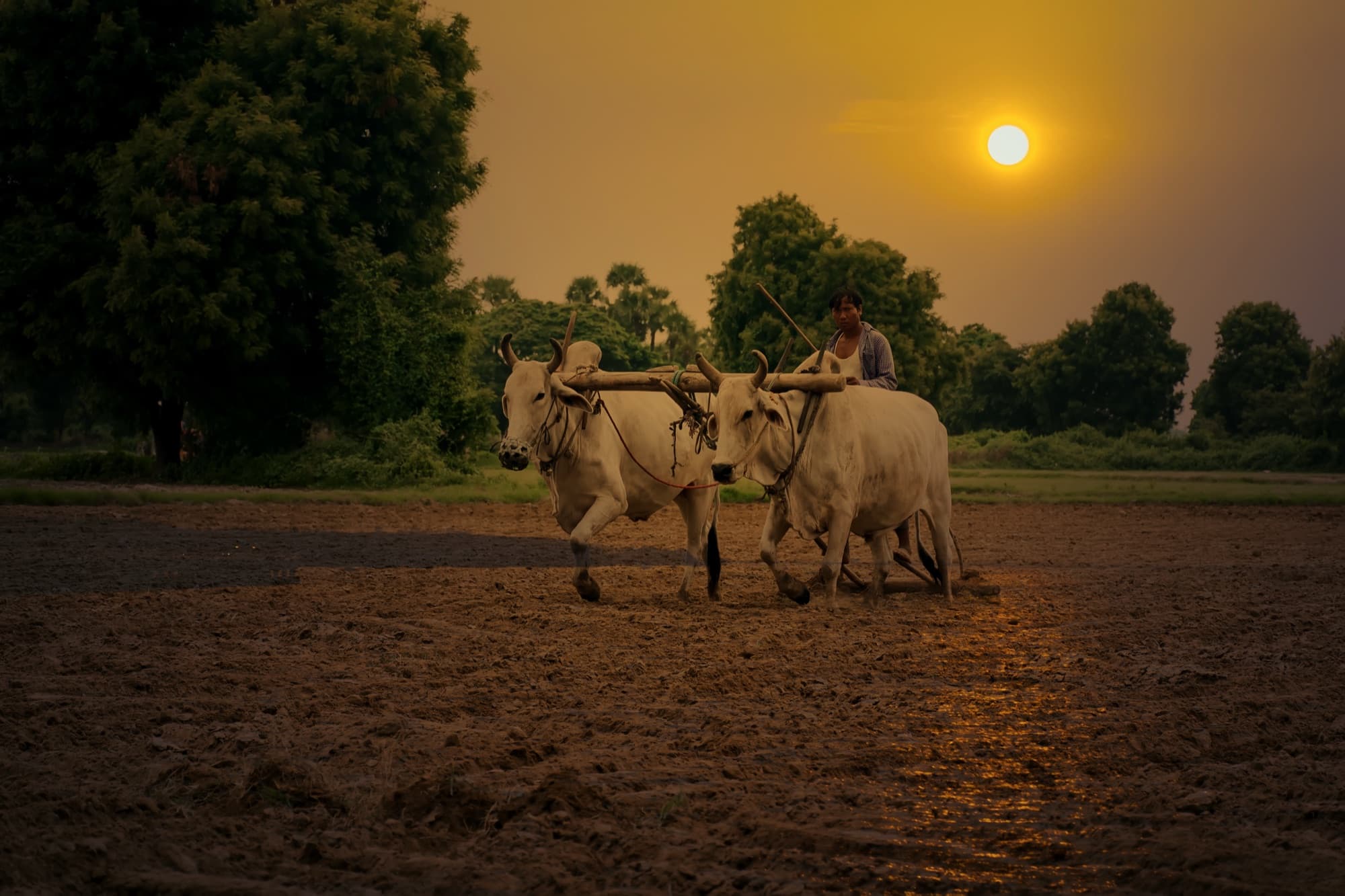
One investment programme that works for the people putting money in, the people eating the food, and the farmers raising the animals.
For investors
Halal yield on a real asset
A verified Takaful-protected stake in a real economy asset, with live reporting on where capital sits and how the herd is performing. Stronger returns than a conventional deposit.
For consumers
Traceable food safety
The Bangladesh Food Safety Authority flagged contamination or adulteration in 33% of tested food samples last year. Roughly 93% of the country's meat moves through informal channels. This programme gives consumers, and the investors funding them, livestock that is vaccinated, dewormed, and recorded from enrolment to sale.
For farmers
Real financial records, better margins
Farm management tools that capture what farmers already do every day, giving them a formal financial record for the first time and direct access to capital they were previously locked out of.
Why this did not exist before
Standard Chartered values the global Islamic finance opportunity at $5.5 trillion. ISF Advisors puts the annual smallholder finance gap at over $220 billion. What has been missing is the infrastructure that lets a remote investor fund a farmer on the other side of the world and see, in real time, where every cent goes.
Investors cannot see the money move
Once capital crosses borders into a livestock operation, visibility disappears. Most development finance institutions either manage these programmes by hand or stay out of them.
Sharia compliance is usually a rubber stamp
The common practice is a single Fatwa at the start of a programme and nothing after. Continuous oversight by qualified scholars has been operationally impractical.
Livestock has no history attached
Feed, vaccines, and treatments happen without records. Consumers face food safety risks and investors face hidden risk on the asset value.
Smallholder farmers are locked out of finance
Without formal records, productive farmers cannot access capital. The missing piece has been a tool that captures what they already do every day.
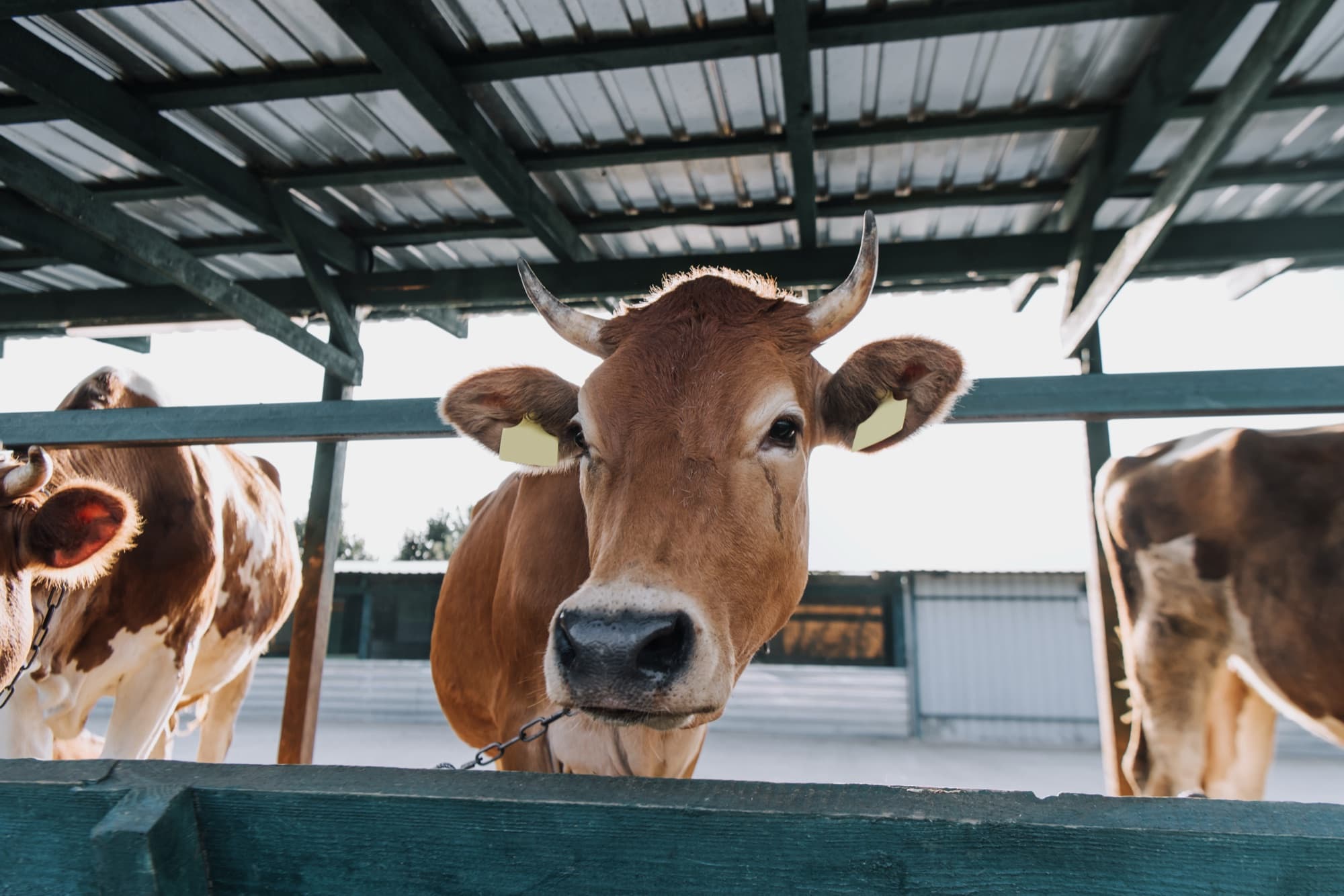
Cattle enrolled with biometric identity in a managed shed
How it works
AgriCore runs the ground operations: farms, vets, biometrics, and farmer training. Blade Labs runs ZeroH, the governance platform that records every event on blockchain and manages the Shariah review workflow.
Biometric animal ID (Pinchometric)
AgriCore's proprietary muzzle biometric technology gives every animal a unique digital identity. Vaccinations, weight, treatment, and sale history all link back to it.
Blockchain-anchored records
Every operational event is written permanently to the blockchain. Both parties (farmer and vet, buyer and seller) sign off with evidence before anything is recorded.
Shariah Supervisory Board oversight
Qualified scholars review the contract before capital is deployed, verify compliance at every lifecycle stage, and run periodic Shariah audits. Every scholar decision is recorded on-chain.
Takaful coverage
Sharia-compliant insurance against mortality and loss, active from the day an animal is onboarded. Claims are settled against biometric and veterinary evidence.
Managed vet network and farm ERP
A managed veterinary network with scheduled protocols. A farm management ERP underneath gives smallholder farmers a formal financial record on their phones.
Live investor dashboard
Capital providers see where funds flow through ZeroH. Milestones, expenses, and impact metrics update as events happen on the ground.
Every step on the blockchain
From the moment an investor deposits capital to the moment returns are paid out, every step is written to the blockchain and cross-signed by the people closest to it.
Investor deposit
Capital enters the Mudarabah pool through compliant banking channels.
On-chain record
KYC, deposit receipt, pool allocation
Cattle acquisition
Funds buy cattle at source. Each animal is enrolled with a Pinchometric biometric ID.
On-chain record
Invoice, biometric scan, animal registration
Veterinary care
Vaccinations, inoculations, and treatments logged against each animal.
On-chain record
Vet certificate, vaccine batch, animal ID
Feed and growth
Daily feed purchases and weight tracking per head.
On-chain record
Feed invoice, weight curve, IoT sensor data
Takaful coverage
Sharia-compliant coverage against mortality and loss, active from day one.
On-chain record
Policy ID, premium, claim events
Sale and returns
Market sale, Mudarabah profit share, and payout to the capital provider.
On-chain record
Sale receipt, distribution ledger, investor payout
The investment lifecycle
From capital deployment to final settlement, governance covers every phase.
Onboarding
Sheds registered, farmers onboarded, cattle bought and enrolled. Biometric ID and Takaful coverage on day one. Shariah board issues Fatwa on the contract.
Monitored growth
Weekly health reports, weight tracking, vaccination records. IoT collars share continuous temperature and location data.
Market execution
Quote-based or pre-approved batch sales, cross-signed by buyer and seller on-chain.
Transparent returns
Expenses reconciled, Mudarabah profit share calculated, payout to capital provider. Full audit trail for every stakeholder.
On the ground in Bangladesh
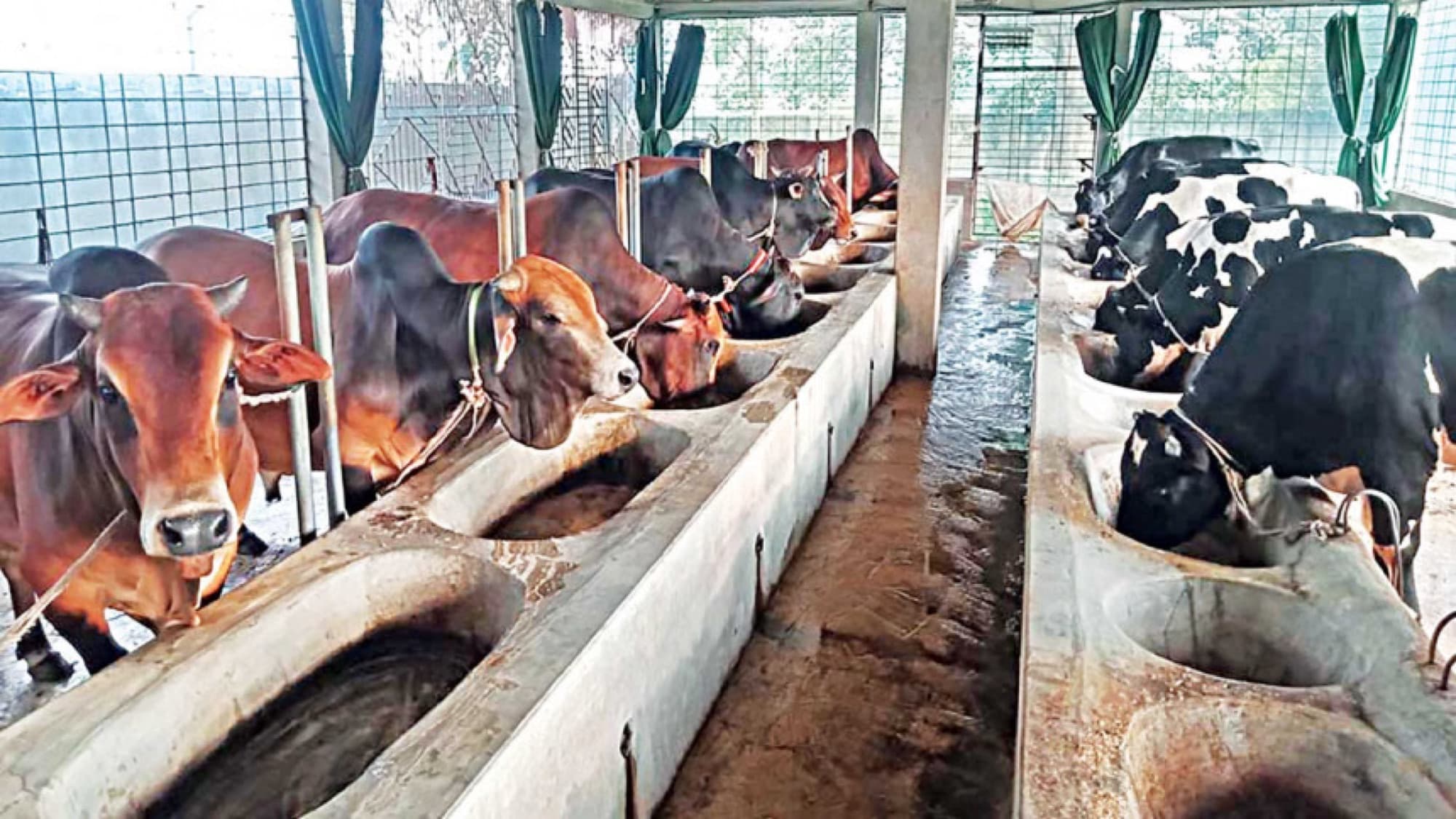
Bangladesh has one of the largest smallholder livestock populations in the world and very little formal infrastructure for insurance, traceability, or investor reporting. It is a demanding place to operate. That is why we chose it.
Why Bangladesh
One of the largest smallholder livestock populations in the world, a sizeable Muslim investor base, and almost no formal infrastructure. A hard proving ground, on purpose.
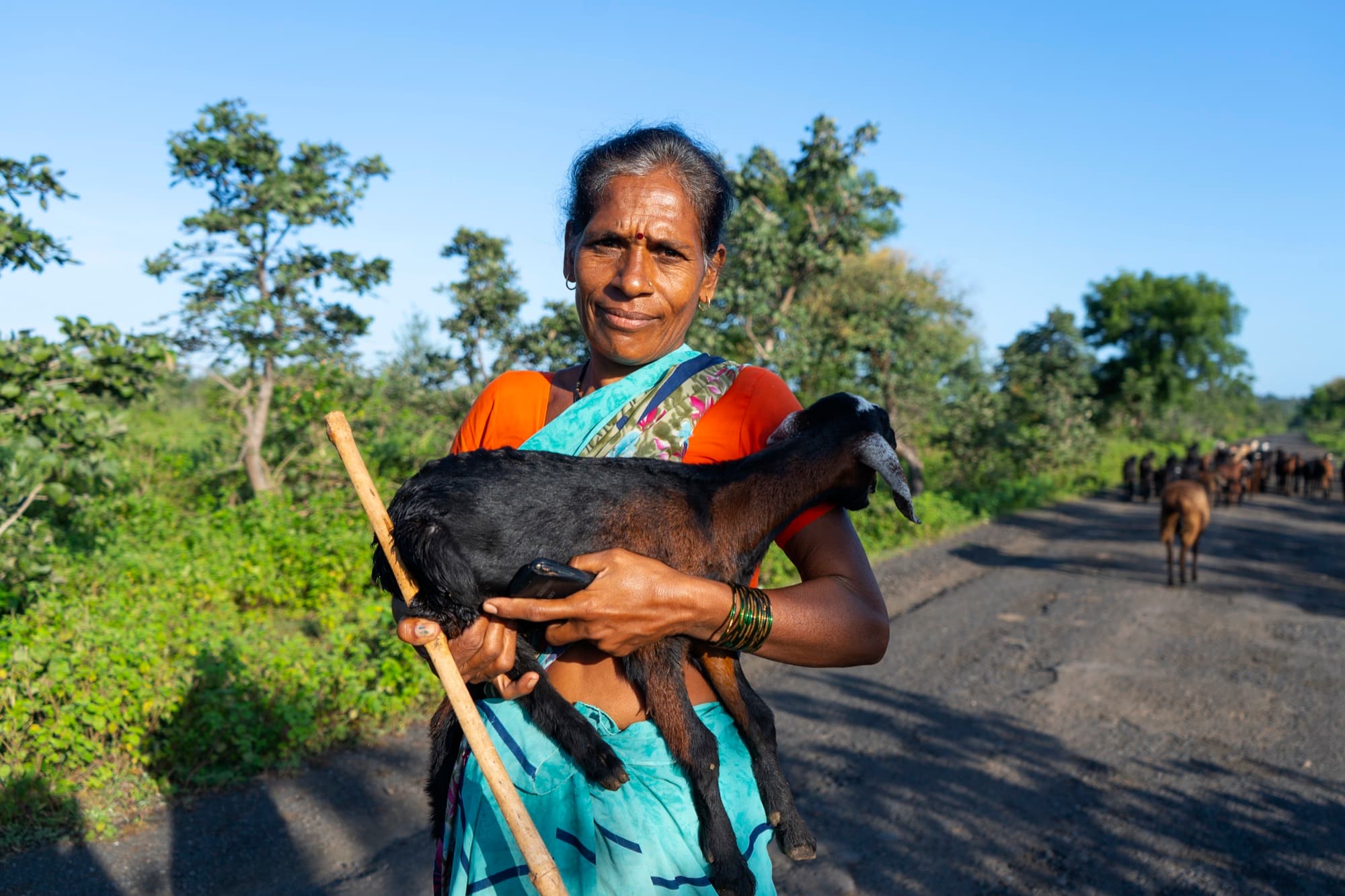
Every species, every region
The same approach works across cattle, buffalo, goat, sheep, camel, and horse. Bangladesh is the first deployment, with expansion to follow once the programme is proven.
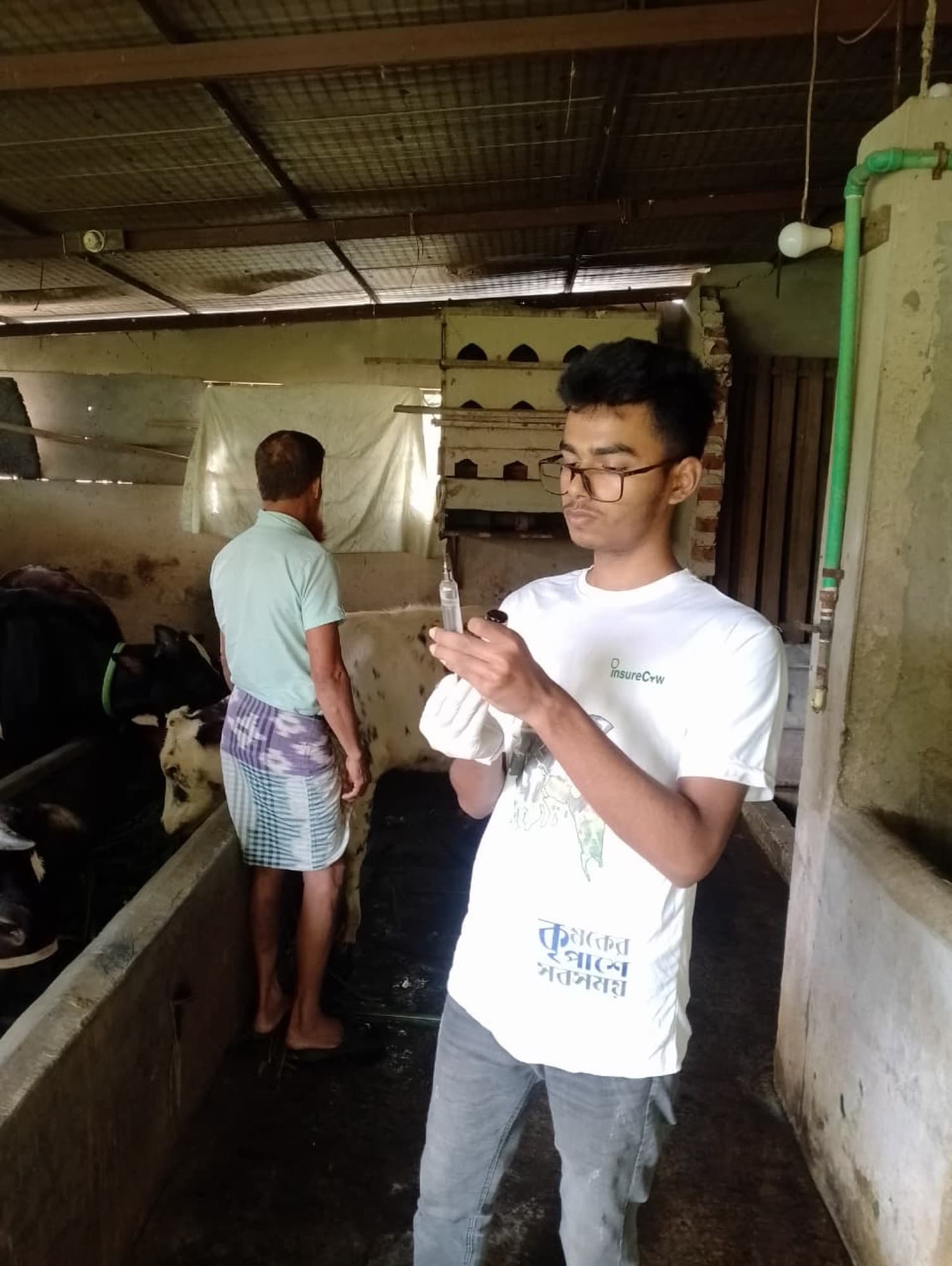
A managed veterinary network
Scheduled vaccinations, disease detection, and treatment protocols, with every event linked to the animal and the farmer on-chain.
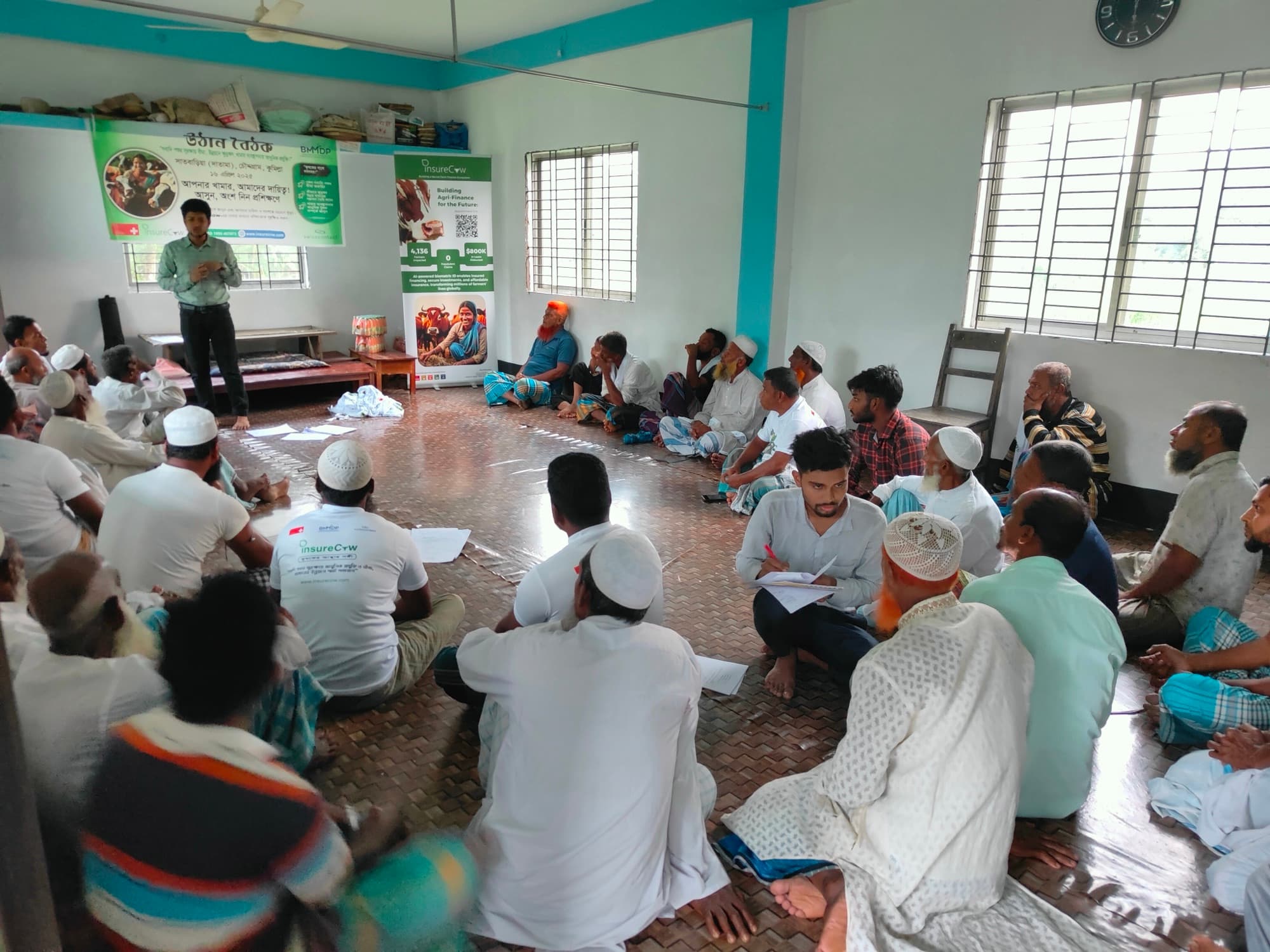
Farmers, not statistics
Smallholder farmers who never had a credit history now have a formal financial record through the farm ERP.

The operational stack
Deep-tech agritech infrastructure built across years of operations in Bangladesh. Designed to run across species and markets.
Biometric animal ID
Pinchometric muzzle biometrics give every animal a unique digital identity. Every event in the lifecycle traces back to it.
IoT collar sensors
Three tiers of collars deliver continuous temperature, location, heat prediction, and early illness detection.
Farm management ERP
A farm ERP built for smallholder operations. Health, vaccinations, disease identification, weight, and feed all on a phone.
Managed veterinary network
Scheduled vaccination protocols with veterinary authority. Complete immunisation records per animal, linked to biometric ID.
Yield and weight tracking
Production analytics for dairy and fattening. Weight-gain curves inform optimal sale timing, and buyers get verified quality data at the point of sale.
Parametric insurance data
Continuous health data enables parametric insurance underwriting and automated claims, letting Takaful providers write agri coverage without the fraud losses that make the category uneconomic.
The partners
Governance infrastructure meets ground-level agricultural operations.
Operations partner
AgriCore is the Singapore-incorporated parent of InsureCow (livestock intelligence) and CropSure (crop insurance). Years of deep-tech agritech infrastructure for livestock biometrics, IoT health monitoring, a managed veterinary network, and a farm ERP that captures what smallholder farmers already do every day.
- Pinchometric biometric ID for every animal
- IoT collar sensors for continuous health and location
- Managed veterinary network across farming communities
- Farm ERP for smallholder financial records
- InsureCow livestock intelligence platform
- Singapore-incorporated, Bangladesh-operational

Governance infrastructure
Blade Labs builds ZeroH, an AI-native GRC platform for regulated Islamic finance. Portfolio company of Qatar Development Bank. Live deployment with Al Rayan Bank inside the Qatar Financial Centre Digital Asset Lab since September 2025. SOC 2 Type II, ISO 27001:2022, and GDPR certified. UK Patent Pending (GB2604344.8) on selective disclosure for cloud data privacy.
- AI-native GRC for regulated Islamic finance
- Live with Al Rayan Bank, QFC Digital Asset Lab
- Blockchain-anchored audit trails
- QDB portfolio company, QFC-registered
- SOC 2 Type II, ISO 27001:2022, GDPR certified
- UK Patent Pending (GB2604344.8)
From the founders
Two sides of the same programme.
“For a long time Sharia compliance in agricultural finance has been claimed more often than it has been demonstrated. On this programme it is demonstrated at every stage, on the blockchain. That is what regulated capital has been waiting for.”
“We have spent years building the ground operations in Bangladesh. What was missing was a governance layer that gave remote investors confidence in where their capital was going. We have that now, and we have it live.”
What comes next
Launch and partnership announcement
NowApril 2026
Capital deployed, system operational. Joint announcement, landing page, and co-branded content.
Behind the scenes
April to May 2026
Field updates from Bangladesh: enrolments, vet visits, facility operations. Real photos, real progress.
Technical deep-dive
May 2026
Published analysis of the Mudarabah governance architecture and how blockchain anchoring works in practice.
White paper publication
Q2 2026
Academic paper on Sharia-compliant agricultural finance governance published on SSRN.
Progress reports
Ongoing
Verified milestone updates as the lifecycle progresses. Health metrics, operational milestones, and governance events shared publicly.
Press release
The full announcement with dateline, quotes, and boilerplates. Journalists are welcome to contact ints@bladelabs.io for photos and briefings.
Read the press releaseWhite paper coming soon
A research paper on the governance framework for Takaful-backed livestock investment, co-authored with academic partners. Scheduled for publication on SSRN.
Notify me when publishedWho this is built for
The programme runs in Bangladesh today. The governance platform underneath it is available for operators and capital providers anywhere in the world.
Development finance institutions
Verifiable governance for capital deployed into agriculture. Live traceability of funds, Shariah oversight, and impact metrics backed by on-chain evidence rather than paper reports.
Islamic banks and family offices
Sharia-compliant capital deployed into the real economy. Halal yield on a verified livestock asset class with live investor reporting and continuous Shariah Supervisory Board review.
Agritech operators in other markets
Running livestock or crop operations somewhere else? The ZeroH governance layer sits on top of your business and unlocks Islamic and impact capital. Built to run the same model in other countries.
Impact and ESG investors
Verified farmer inclusion, food traceability, and climate-linked data. Every impact claim backed by on-chain evidence and reviewed by qualified scholars at every stage.
Want to see more?
Request a demo, explore the ZeroH agritech product, or visit AgriCore.
Frequently Asked Questions
Sources
Every stat on this page is publicly verifiable.
- Islamic finance industry size. Standard Chartered, Islamic Banking for Corporates: Broadening Horizons, 2025. Estimates the global Islamic finance opportunity at USD 5.5 trillion, projected to reach USD 7.5 trillion by 2028.
- Smallholder finance gap. ISF Advisors, Rural and Agricultural Finance State of the Sector: Beyond the Frontier, 2025. Demand of USD 323 billion against supply of USD 95 billion, leaving an annual gap of more than USD 200 billion, with roughly 70% of smallholder credit demand unmet.
- Bangladesh livestock population. Bangladesh Department of Livestock Services (DLS), 2023 statistics. Approximately 24.8 million cows, 26.9 million goats, 3.82 million sheep, and 1.51 million buffalo.
- Food adulteration and contamination. Bangladesh Food Safety Authority (BFSA) surveillance data, fiscal year 2024 to 2025. Adulteration, contamination, or serious quality defects found in 571 of 1,713 tested food samples (33.3%).
- Informal meat channels. World Bank communication, 2025. Approximately 93% of Bangladesh meat is processed and sold through informal channels, often without cold storage.
- Traceability as a public-health priority. WOAH (World Organisation for Animal Health, formerly OIE) Terrestrial Animal Health Code; FAO and Codex Alimentarius traceability framework; WHO Global Strategy for Food Safety 2022 to 2030.